Activity Report of the Japan Disaster Dental Assistance Team (JDAT) during the 2026 Kumamoto Earthquake [August 13-16, 2026]
September 9, 2026
Kyushu Dental University (Public University Corporation)
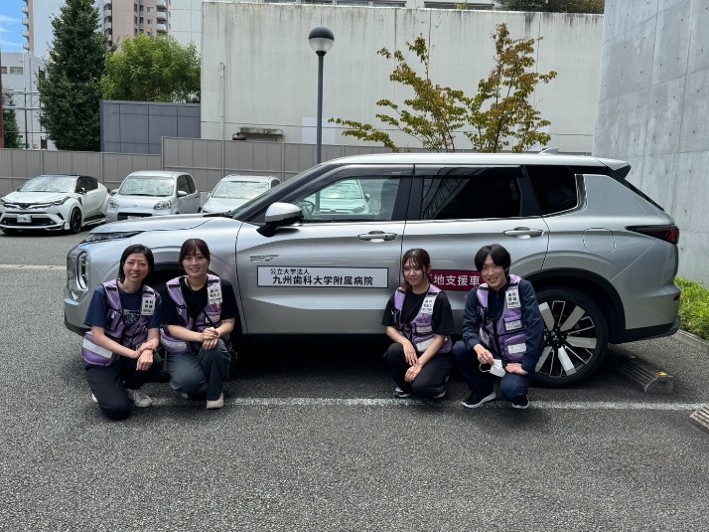
Following the 8 Kumamoto Earthquake, and based on requests from the Ministry of Health, Labour and Welfare and the Japan Dental Association, faculty and staff from Kyushu Dental University (Campus: Kitakyushu City, Fukuoka Prefecture; President: Awano Shuji) participated in disaster dental health and medical support activities in Kumamoto Prefecture as members of the Japan Dental Alliance Team (JDAT).
JDAT supports public health activities in disaster-stricken areas, with the aim of helping to maintain the health of disaster victims and restore local dental care.
This time, we provided dental health and medical support mainly to evacuation centers in Yatsushiro City.
Main activities
During evacuation, changes in living environment, water shortages, material shortages, and changes in diet make it difficult to maintain the same level of oral hygiene as in normal times. Furthermore, for the elderly and those with underlying medical conditions, poor oral hygiene can affect their overall health, and continuous oral health management is particularly important from the perspective of preventing respiratory infections, including aspiration pneumonia.
Given this background, we provided support at the evacuation centers, focusing on the following activities:
1. Check the oral health condition of evacuees.
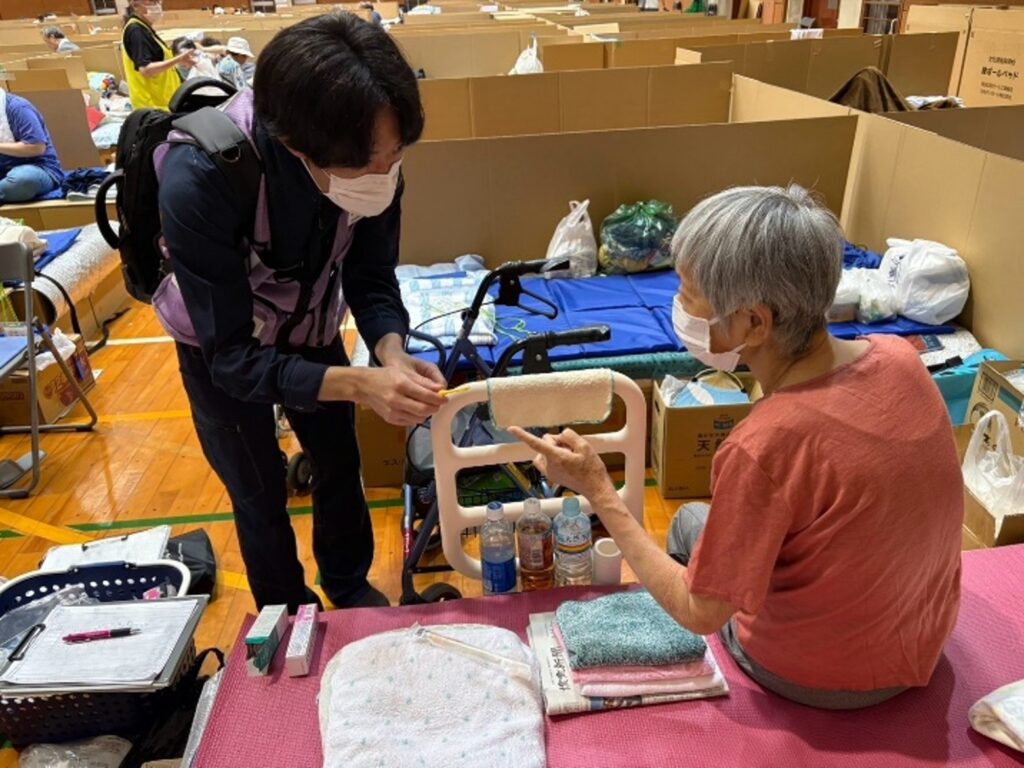
We toured evacuation centers and interviewed evacuees about the condition of their teeth and dentures, oral pain, swelling, bleeding, dry mouth, and problems with chewing and swallowing. We paid particular attention to the situation of evacuees whose oral hygiene could deteriorate due to their evacuation life, such as the elderly, those requiring care, denture wearers, and those with underlying medical conditions, as these could affect their overall health.
2. Oral care aimed at preventing aspiration pneumonia
We checked the oral hygiene status and degree of dryness, primarily for elderly individuals, and provided oral care as needed. We also provided specific instructions on brushing teeth, cleaning dentures, and cleaning the tongue and oral mucosa, so that evacuees and their families could continue to practice oral hygiene.
We provided instruction on oral care methods that are feasible even in environments with limited water and supplies, and raised awareness about the importance of maintaining oral hygiene during evacuation.
3. Distribution of oral care products
We distributed oral care products such as toothbrushes and toothpaste to evacuees. Rather than simply distributing supplies, we explained how to use them appropriately, taking into account the evacuees' age, physical condition, and denture use. We also checked for shortages of oral care products and strived to understand the overall needs of the evacuation center.
4. Oral hygiene instruction and dental health instruction
We explained to the evacuees the importance of oral hygiene management during their time in evacuation centers.
In particular, we explained to the elderly that it is important to reduce oral bacteria as much as possible, keep dentures clean, and prevent dry mouth. We also reminded them to be mindful of decreased food intake and insufficient fluid intake. We provided guidance tailored to the evacuees' situations so that they could continue oral care as a daily habit to the extent possible, even in the unique environment of evacuation.
5. Treatment of dentures
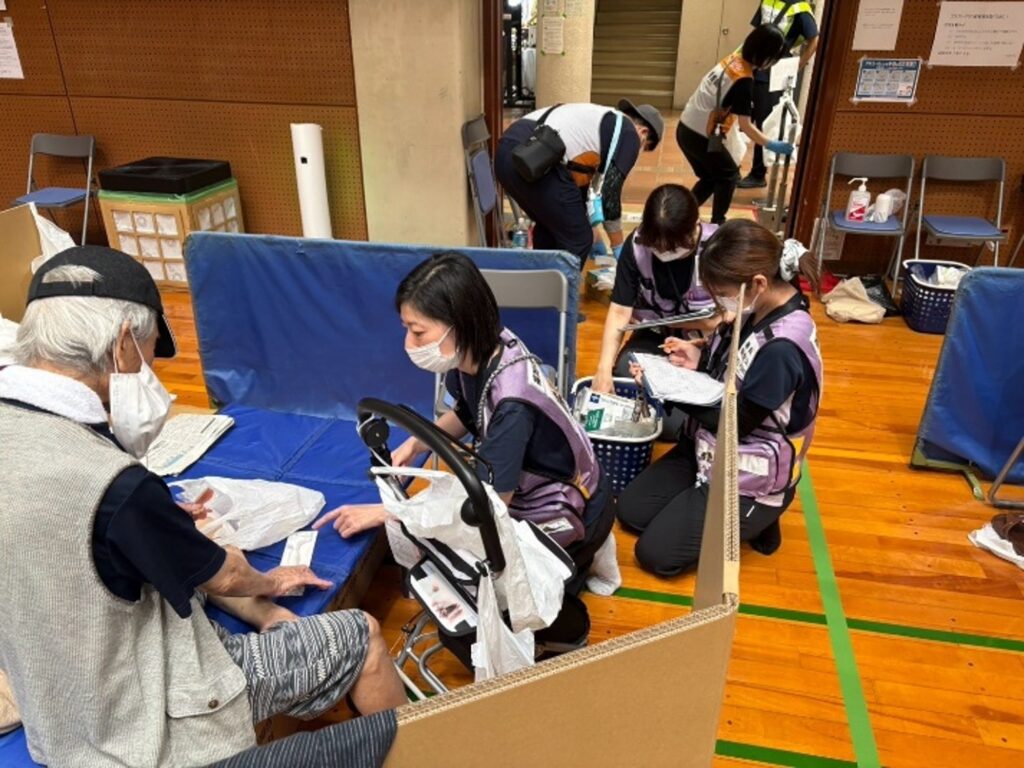
We checked the condition of dentures for evacuees who complained of ill-fitting dentures, pain, and difficulty chewing, triggered by the earthquake and their life in evacuation centers.
For cases where denture adjustments were possible, we addressed the issue on the spot to improve chewing function and reduce pain. For cases where treatment at the evacuation center was difficult, we ensured that patients could receive ongoing care at local dental clinics.
Looking back on the activities
Immediately after a disaster, emergency medical care is the top priority, but as time passes, addressing health problems associated with life in evacuation centers becomes crucial. In the dental field, a variety of problems can arise, including deterioration of oral hygiene, loss, damage, or ill-fitting dentures, acute symptoms of teeth and periodontal tissues, dry mouth, and decreased eating and swallowing function.
Through this experience, I realized that in providing dental support during disasters, it is extremely important not only to address dental diseases themselves, but also to prevent the deterioration of oral hygiene due to living in evacuation centers and to maintain the overall health of disaster victims.
In evacuation shelters, many evacuees live together, making it difficult for individual dental needs to surface. Furthermore, there are elderly and those requiring care who may find it difficult to express their dental problems themselves. Therefore, dental professionals need to proactively reach out to evacuees and understand their potential needs.
Furthermore, we recognized the importance of not only distributing oral care products but also explaining how to use them, thereby encouraging evacuees to practice self-care. We believe that ensuring the continuation of oral hygiene management even after disaster relief efforts have ended is one of the important roles of JDAT activities.
On the other hand, there are limitations to dental care that can be provided solely within evacuation centers. Therefore, I felt it was important to share information with local dental associations, government agencies, public health centers, and local dental clinics, and to build a system that can smoothly transition patients to local dental care.
Final thoughts
Through our activities in Yatsushiro City, we reaffirmed that the role of dental professionals during disasters is not limited to treating dental diseases, but extends to a wide range of tasks, including preventing secondary health damage such as aspiration pneumonia, maintaining eating function, ensuring oral hygiene, and facilitating a smooth transition to community dental care.
In order to provide swift and effective dental support during a disaster, it is important to acquire knowledge and skills related to disaster dental health care, as well as to establish a collaborative system with various professions and related organizations during peacetime.
Contact
■ Regarding JDAT's activities
Kyushu Dental University Hospital
E-mail: byoinjim●kyu-dent.ac.jp
*When sending, please replace ● with @.
■ Matters related to general university public relations
Kyushu Dental University Student Affairs Office
E-mail: gakusei●kyu-dent.ac.jp
*When sending, please replace ● with @.
About Kyushu Dental University, a public university corporation
Kyushu Dental College is the only public dental school and dental college in Japan, and is a "comprehensive university of oral medicine" consisting of a department of dentistry and a department of oral health care. We believe that dentistry is medical care that supports daily life and happiness through "oral health." In the Faculty of Dentistry and the Graduate School of Dentistry, we are committed to nurturing dental professionals. In addition, since its opening in 1914, the attached hospital has continued to serve as a core hospital with dental expertise that is closely connected to the local community.
<Overview>
School name: Kyushu Dental University
Location: 2-6-1 Manazuru, Kokurakita-ku, Kitakyushu City, Fukuoka Prefecture
President: Shuji Awano
Established: 1914